Friday, 10 July 2020

'Objects of Desire'.


I like to be surrounded by nice things, they make one's life more pleasant.

I'm not talking about expensive things; but objects that are either beautiful in their own right, simply of good design, or what one might call 'attractive curiosities'.


On my desk, in front of me, there is a large mug which contains pens, knives, a magnifying glass, and a few other essentials. For the past 30 years or more it has also contained this antique small 4 inch pocket level. It has become my version of 'worry beads' that I often play with, without really being aware of the fact. The only time it is actually used for its intended purpose is if I've noticed paintings in a house that are not hanging level, the next time I visit I take the level with me, and secretly put them right.


Another favourite object is this antique pewter mug. I bought it at a tiny antique shop in Sussex, when I was teaching at a nearby school. I payed quite a lot for it, but was so enticed by the beauty of its form that I would have been prepared to pay even more than I did. It usually contains coloured pencils.


Obviously I can't illustrate all my favourite objects, but here is another one. It's an old Masonic badge from my home UK county of Sussex. It is beautifully embroidered, and contains a 'Martlet' (Swift) in the centre. It sits on the large fireplace lintel in the sitting room, and represents a tiny bit of home.


And finally, a small pebble from Brighton beach painted by my daughter Tenpin. I love it. We call her Miss Prim.

We all possess objects that we would hate to lose. They may not be valuable, but they are precious. These were just four of mine.

Thursday, 9 July 2020

Greengage Season.


The ladder is propped-up against the tree, and  I have been (very precariously) picking Greengages from amongst the higher branches, where they are not only better, but more abundant.

The Greengage is a funny old fruit. Not really something that is often planted in orchards today, but a good old-fashioned plum that gives good service, as long as it is 'watched over'.

Its season is short. On account of its high sugar content it's a favourite target for those insects that like to lay eggs inside a juicy fruit. Unaffected fruits are scarce, but are worth the trouble to find.


Picking them 'just right' is a question of strict observance. Too unripe they are very sour, and too ripe they are far too sweet. One has to catch them at just the right moment; and that can be during a very limited period of only three or four days.

We eat them fresh, and freeze a few for winter tarts. Some make jam, which I find far too sweet.

I would actually recommend that, if one has plenty of space, one plants a tree at the corner of one's orchard; they can do no harm, and they grow from pips. 

I classify them along with Quinces and Medlars; old fashioned but good to have growing nearby. And when caught 'just right', they are absolutely delicious!


Wednesday, 8 July 2020

Hereabouts.


The South West corner of France, the Périgord area in particular, is a very pleasant place to live. It has a reasonable climate; never much above 30 C in Summer, and never much below -5 C in Winter. As you can see by the above photo, it is also very verdant; which means it usually rains enough to keep things lush-looking.

But its greatest attributes are its beautiful architecture, superb gastronomy, and wonderful unspoilt gently-rolling wooded landscapes; and you don't have to be a multi-millionaire to live here. Beautiful old stone-built properties are possibly half the price (if not less) of those back in the UK.


Beautiful medieval Chateaux are around every corner. This exquisite 'family-sized' example (above), is quite nearby. Such wonderful buildings are commonplace.

Like so many rural idyls, there isn't a great deal going on. Farming (what's left of it) is possibly the main activity along with tourism, but paid employment for school/university-leavers is rare. To live here it is best to have been born on a farm, and to rely on Brussels for handouts. Most educated young people wanting a well-paid job tend to leave for either Bordeaux or Toulouse, leaving an area top-heavy with oldies.

People looking for nightlife, international cuisine, raucous music concerts, sandy beaches, noisy bars, souvenir shops, and 'Tea like mum makes', would be advised to go elsewhere.

However, all this inactivity makes the area a wonderful place to live. More often than not, we sit outside in perfect silence, and, at present, with very few white lines in the sky, the area must be as it was hundreds of years ago, and that suits me fine.

However, I fear that it may not always be thus. Things are changing fast.


Tuesday, 7 July 2020

The Pumpkin Patch.


Back in May I dug this dedicated Pumpkin/Squash bed. It measures just 1.20 by 1.20 Metres, and was heavily manured and composted. I planted 3 large ribbed grey Pumpkins, 3 medium sized red Pumpkins, and 3 Butternut Squash.


Now, just a couple of months later, it looks like this. I'm encouraging the growth to head North into no-mans-land. It'll be easy enough later to find the fruits amongst all the undergrowth.


There are even tiny Pumpkins forming. I'm predicting that we'll have a very good crop.

Monday, 6 July 2020

Another one bites the dust!


We had become used to frequenting a relatively newly opened bakery in our small nearby town.

It was run by a young couple (as are so many), who were very industrious and eager to please. You may remember my writing about their 'loyalty card' scheme to reward 6 baguettes de tradition purchased, with a 7th one free (above). An offer of which I often took advantage.

I now hear that they have closed, and the couple have already moved away.

Newcomers, as in so many places, are often viewed with suspicion. A couple opening a bakery in direct competition with another that had been long-established, is regarded with even more suspicion. The locals could not be seen to be supporting 'the enemy', so they mostly stayed with what they knew. We, on the other hand simply went where they sold the best bread.

Small town (I would call it 'village') mentality can be seriously detrimental to the overall welfare of life in the country. Employment is hard to find out in the Styx, and to hound-out two young people who were working hard to make a success of their new business is, frankly, disgraceful. I don't know all the ins and outs of the matter, but I'm pretty sure I know roughly what happened.

Had they been poor quality bakers, I wouldn't have given the matter another thought, but they were GOOD bakers, and for me that was all that mattered.

They won't read this, but I would like to send them my very best wishes for a more successful business elsewhere! I miss them.

Sunday, 5 July 2020

A Sunday Special: Was Christ black?


Dear Justin Welby, the Arch-do-gooder of Canterbury, has decided that we should 'reconsider the notion that Christ was white'. Since the recent death of George Floyd in the USA, skin colour has become all-important in just about every sphere imaginable, and Welby is not allowing Jesus to escape scrutiny.

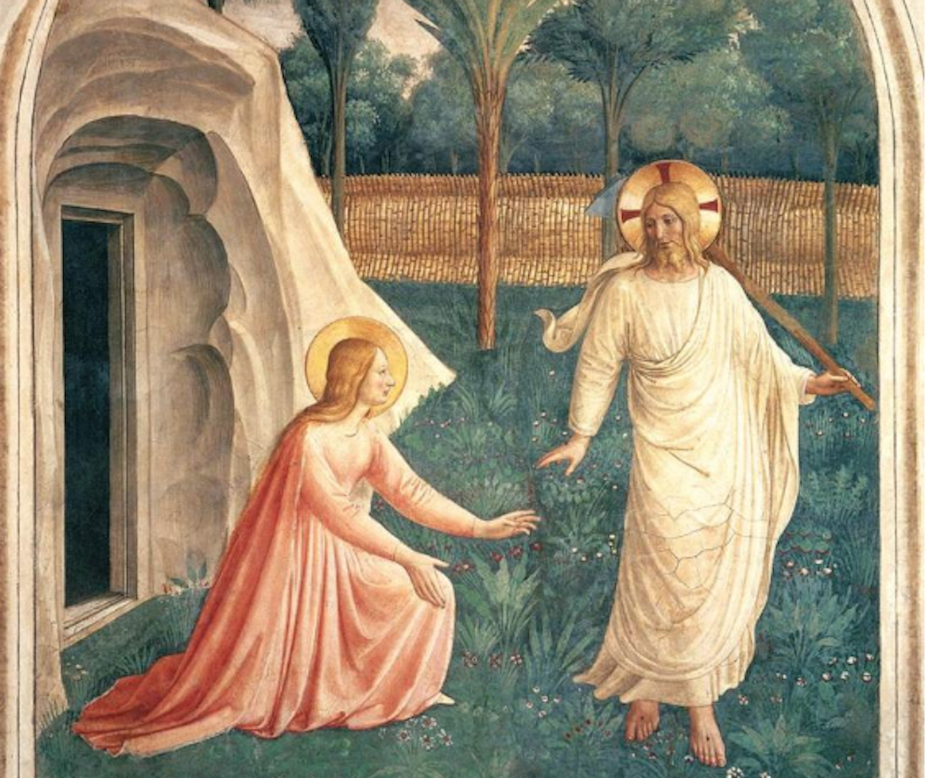
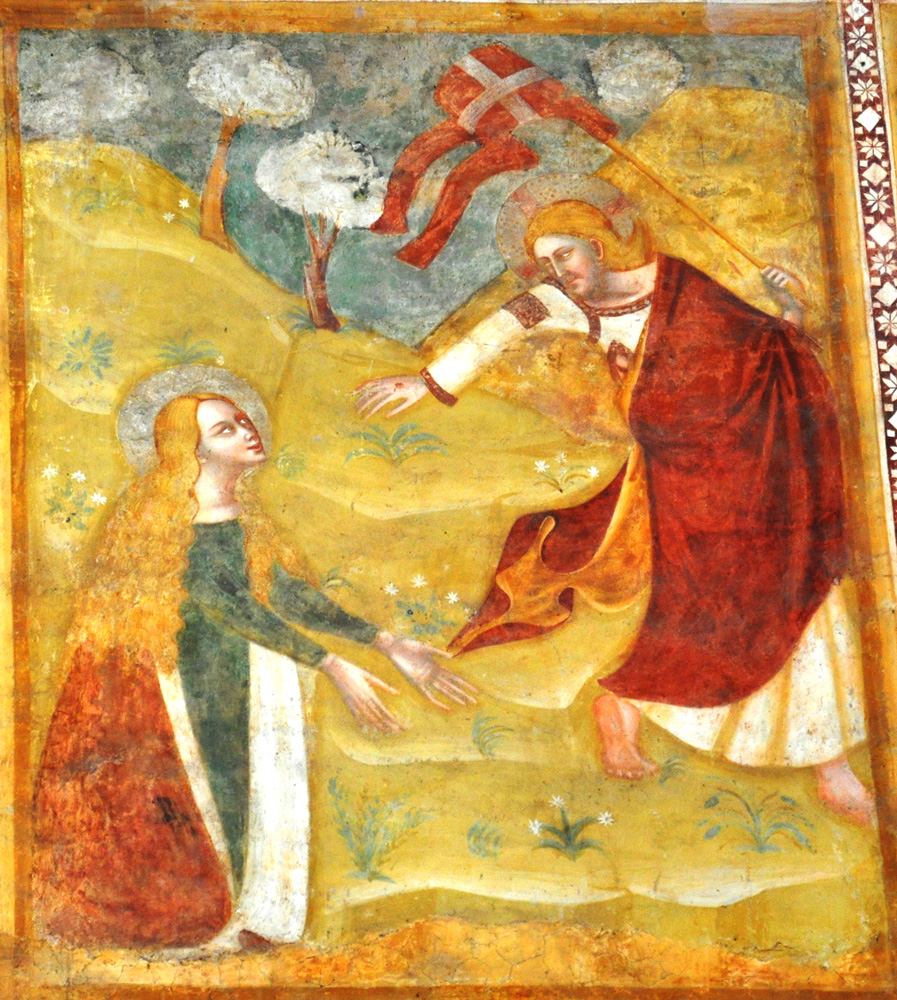
Jesus is depicted as being of various skin colours; in white countries he is usually shown as white, and in black countries as black. In fact very little is known of his appearance, and the imagination of artists is as varied as their countless depictions.

The only physical description of Jesus in The Bible comes from Revelations 1:12-16, and I imagine that if one is prepared to believe in virgin birth, resurrection, and assorted gods and devils, it's no more far-fetched to believe the physical description of him in the all-important book.

                                  The Resurrection of Christ in Art: Six Iconographic Strategies

He is described thus: 'His hairs were white like wool, as white as snow, and his eyes as a flame of fire'. The description then continues to say he had feet the colour of burnished bronze.

Not much to go on, but we can at least start to build a picture. He was a Palestinian Jewish man, very blond, with striking eyes, and tanned feet. Welby, in his attempt to be PC, might have us believe that he was black. I think maybe he should read his Bible; unless of course he considers it to be a pick-n-mix book!

The two illustrations above show both he and Mary Magdalene as white and gingerish; not unlike many present day neighbouring Syrians.

May I be radical and suggest that those who wish to see him as white, continue to do so, and those who wish to see him as black also continue to do so. Just buy a picture for your wall that suits your own personal vision.

I'm no Christian, but I was brought-up in the traditions of The Protestant Church of England, and I refuse to be told that the Christ I've heard about for over 70 years was actually black. Next they'll be telling me that Martin Luther King was white.

Welby was born in 1956, so for the past 64 years he's been perfectly happy that his boss was a long-haired, caucasian, hippy, with Superman-like powers, so why (following the death of a black man in the USA) he should suddenly wonder if Christ was black, I really can't imagine; maybe he is simply following a knee-jerk trend.

Cro returns.


I've had a week's holiday, and am refreshed, de-stressed, and ready to take-up my pen.

Sadly I shall be keeping my comments 'moderated' for a while (which I really don't wish to do), just to filter out any idiotic remarks from certain trolls; and to retain what sanity I still have left.

Related Posts Plugin for WordPress, Blogger...